Flower Moon: A Thoughtful Embroidery Design for Real Projects
As someone who’s stitched hundreds of designs across apparel, home goods, and boutique merchandise—and reviewed dozens of digital embroidery files for craft businesses—I opened Flower Moon with quiet curiosity. Not hype. Not hope. Just the practiced eye of a designer who knows how easily a beautiful vector can unravel under needle and thread. This isn’t just another floral motif—it’s a mood, a moment, a quiet balance of organic softness and intentional structure. And that matters—especially when you’re stitching for someone else’s wedding gift, your Etsy shop’s best-selling tote bag, or a baby’s first embroidered onesie.
First Impressions: Delicate, Not Dainty
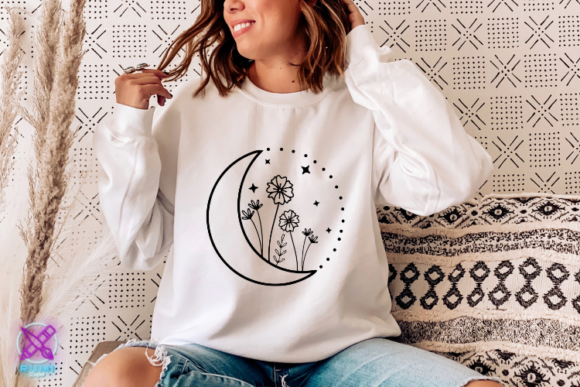
Flower Moon lands with gentle confidence. It’s not oversized or aggressively detailed—no fussy petals or micro-stitching that’ll vanish on cotton twill or bleed on brushed fleece. Instead, it offers a centered bloom (think moonflower or night-blooming cereus) cradled by subtle, asymmetrical leaves and a faint crescent curve that wraps the composition like breath. The layout feels intentional for hoop placement: no awkward stretching across corners, no elements bleeding into stitch margins. Visually, it leans into calm—ideal for nursery decor, slow-living brands, or minimalist apparel. But don’t mistake its restraint for simplicity. There’s thoughtful rhythm in the petal spacing, and the curve of the “moon” line suggests movement without clutter. That kind of visual intelligence translates directly to how well it reads after stitching.
Where Flower Moon Truly Shines
- Embroidered tote bags: Stitches cleanly on medium-weight canvas, holds shape without puckering, and reads clearly even at 3.5"–4" wide—the sweet spot for side-panel branding or artisanal gifting.
- Sweatshirts and hoodies: Its moderate stitch density avoids stiffness on fleece-backed fabric. The design breathes where it needs to—no dense fill-stitch swamp in the center.
- Baby items and nursery pillows: Soft edges and open negative space make it feel tender without being saccharine. Perfect for organic cotton blankets or linen pillow covers where texture matters.
- Embroidered patches: Clean outer contours mean sharp cut edges and easy peel-away backing. Works beautifully as a sew-on or iron-on accent on denim jackets or aprons.
- Holiday and wedding gifts: Neutral enough for year-round use, but carries quiet symbolism—ideal for “new beginnings” themes, moon-phase celebrations, or botanical bridal favors.
Where to Pause—and Test First
Like any well-designed embroidery file, Flower Moon asks for context-aware decisions—not assumptions. Here’s where attention pays off:
- Small hoop sizes (under 4"): The crescent curve and outer leaf tips may need slight trimming depending on your machine’s auto-hooping behavior. Always preview the stitch path before committing.
- Textured or stretchy fabrics: On slubbed linen or lightweight knits, use medium tear-away + light cut-away stabilizer. Running stitches in the crescent line benefit from extra support to avoid waviness.
- Dark or heavy fabrics: Satin-stitched petals gain depth with tonal thread (e.g., charcoal gray on navy), but avoid ultra-light threads—they’ll disappear. Test contrast on scrap first.
- Curved surfaces (caps, curved pillow fronts): The design’s gentle arc helps, but avoid placing the crescent line directly over a seam or crown peak—stitch distortion is more likely there.
- Frequent-wash items (tea towels, baby clothes): Confirm stitch density allows for flexibility. Overly tight fills fatigue faster. If your version includes dense fill-stitch centers, consider simplifying in editing software—or opt for a satin-stitch-only variant if available.
What It Adds to Your Finished Product
Flower Moon doesn’t shout. It invites. That changes how customers interact with your handmade product. On an apron sold at a local craft fair, it reads as considered—not generic. On a personalized sweatshirt listed on Etsy, it elevates perceived value without demanding premium pricing. For small shop owners building brand consistency, its repeatable elegance works across categories: same design on a kitchen towel, matching baby cap, and holiday card suite. And because it avoids trend-heavy details (no glitter effects, no hyper-realistic shading), it stays relevant across seasons—making it smart inventory for digital embroidery file sellers or craft business owners curating evergreen design assets.
Practical Notes Every Embroidery Designer Should Keep Handy
- Always run a test stitch on fabric *identical* to your final project—even if it’s just a 2"x2" scrap. Thread tension, stabilizer choice, and fabric nap change everything.
- Check how Flower Moon renders in black-and-white mockups. Does the crescent line stay legible? Do petal edges hold definition against busy backgrounds?
- Compare thread color palettes on light vs. dark fabric. A single ecru thread may glow on oatmeal linen but vanish on charcoal.
- Review stitch order: Does the crescent lay down before or after the main bloom? That affects sheen and layering clarity.
- If using for commercial embroidery (e.g., client-branded totes), verify licensing terms. Since this is a Graphics-category file marketed for cutting machines, confirm whether the license permits stitched end products for resale—and whether digitization rights are included.
- For printable mockups or digital previews, use the clean vector outlines—its balanced proportions scale gracefully from 2" patches to 6" wall art.
In short: Flower Moon earns its place in a working designer’s library—not because it’s flashy, but because it’s trustworthy. It behaves. It adapts. And most importantly, it lets the maker’s intention shine through, not the machine’s limitations. Whether you're prepping for a custom embroidered pillow cover, batch-producing boutique tea towels, or adding quiet elegance to your next Etsy listing, this design supports craftsmanship instead of competing with it. That’s rare. And worth holding onto.